
East African nations are making a powerful statement of intent. By increasing education budgets for the 2024/25 fiscal year, governments from Kenya to Rwanda are demonstrating a profound commitment to their future generations. Kenya leads in sheer volume with USD 4.98 billion, representing 27.6% of its national budget. Rwanda put in USD 561 million (13.9%), Uganda invested USD 2.25 billion (8%), and Tanzania allocated USD 754 million (4%), of its national budget.
These budget increases reflect a focused effort to improve access to education, enhance the quality of teaching, upgrade infrastructure, and improve learning outcomes. This trend signals a promising step toward achieving quality education for all in the region.
Education Budget vs. PerformanceYet, as the data reveals, increased funding does not automatically translate to improved outcomes. The picture seems to be more complex than what is stated.
- Kenya’sUSD 4.98 billion investment translated into the region’s highest SDG 4 score (71.1), showing that high spending aligned with some meaningful outcomes.
- Rwanda, with far smaller funding, still achieved a 61.3 score, proving that efficiency and strategy can stretch limited resources.
- Tanzania’s4% allocation resulted in a modest 48.7 score, highlighting funding shortfalls despite progress in access.
- Uganda, with 40.8, underlines the reality that systemic reforms are as critical as financial inputs.
This disparity underscores a critical regional truth: the key to progress is not just the amount of investment, but the intelligence behind it.
Why Spending Alone Isn’t Enough
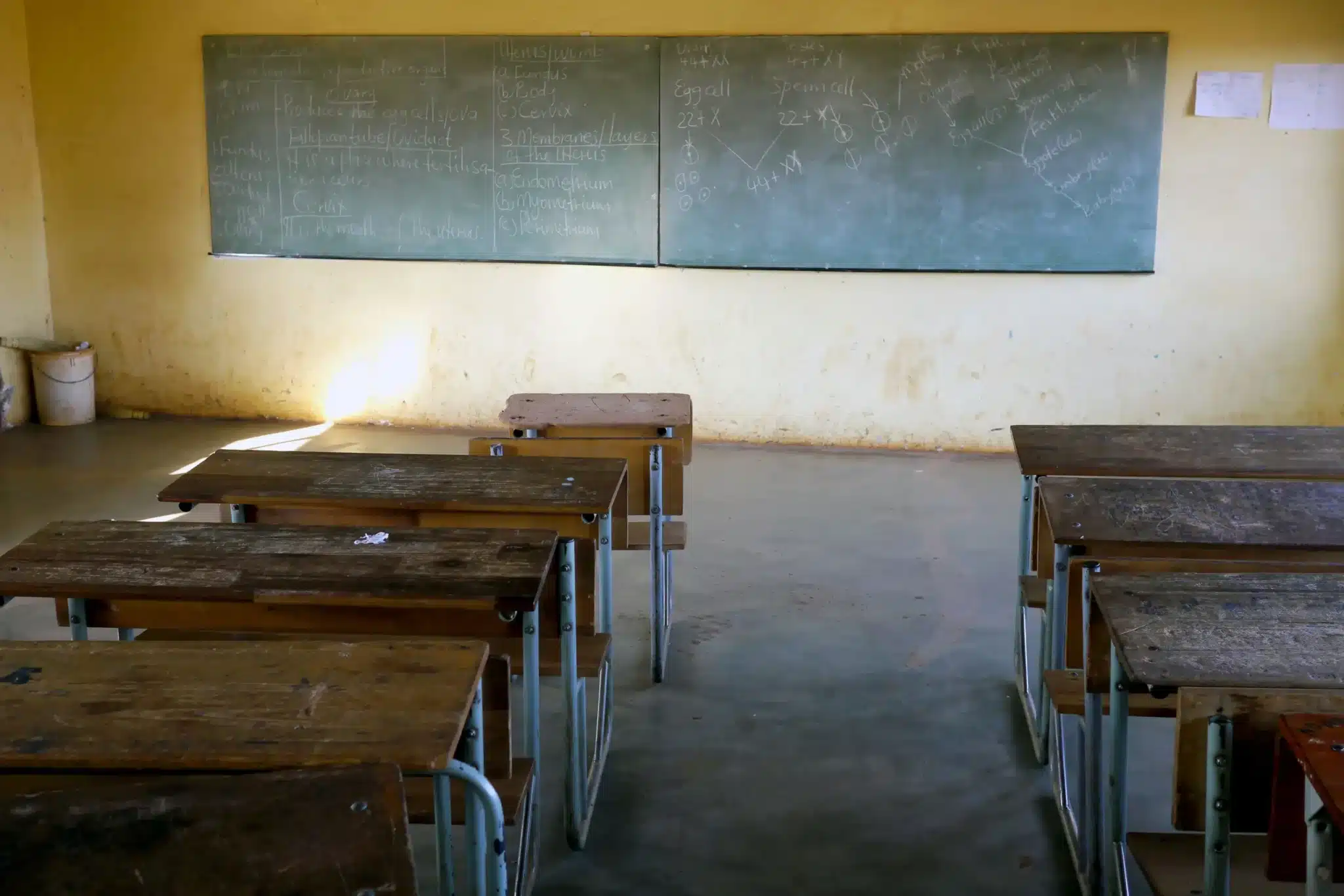
Infrastructure Gaps: Despite billions of dollars being invested, many rural schools in East Africa still lack sufficient classrooms and reliable digital connectivity, which limits students’ learning opportunities.
Teacher Shortages: Large class sizes, sometimes exceeding 40:1, combined with low training and high turnover, continue to affect the quality of education, even with increased budgets.
Economic Pressures: Debt repayments and currency fluctuations reduce the real value of education spending, making it harder for governments to fully fund schools and essential learning resources.
Policy Implications
To ensure that the billions allocated to education translate into real learning outcomes, East African countries need to address the structural challenges limiting impact:
Targeted Infrastructure Investment Budgets should prioritize building classrooms and expanding digital connectivity in rural and underserved areas, ensuring every child has a conducive learning environment.
Teacher Development & Retention Increased spending must go hand-in-hand with training, supporting, and retaining teachers to reduce high pupil–teacher ratios and improve classroom quality.
Economic Resilience & Smart Financing Governments should protect education funding from debt pressures and currency fluctuations, creating sustainable financial models that guarantee consistent resources for schools.
Efficiency & Accountability Stronger procurement systems and monitoring mechanisms are essential to ensure funds reach classrooms, learning materials, and students rather than being absorbed by administrative overhead.
Regional Learning & Coordination Sharing best practices and successful education models across the AU and EAC can help countries replicate strategies that improve quality, ensuring that higher budgets lead to tangible gains in learning outcomes.
Looking Ahead: From Investment to Impact
Budgets lay the foundation, but transformation comes when policy, financing, and innovation converge. Africa cannot afford to treat education as just a line item; it must be a strategy.
This is where the private sector, educators, and innovators step in. Companies like Ekima and other edtech leaders already have tools that can stretch every shilling further: interactive content, immersive learning (AR/VR), and locally relevant resources that make lessons stick. Ekima, for example, has partnered with the Government of Tanzania through the Tanzania Institute of Education to develop Opschool(opschool.tie.go.tz), an interactive video learning platform designed to enhance classroom experiences. Combined with government investments, these solutions can ensure that classrooms are not only built but also equipped with methods that prepare learners for today’s digital economy.
The billions for 2025/2026 are already pledged. The next step is making sure they translate into real skills, real access, and real opportunity. That requires not just spending more, but spending smarter, and working with innovators ready to turn budgets into lasting impact.